What Is Liquid Painting? A Plain-Language Explainer for Engineers
Liquid painting applies liquid polymers to metal surfaces to form a protective film. This method offers flexibility in color and finish but requires careful environmental controls. It differs from powder coating in cure time, material handling, and surface preparation requirements.
- Liquid painting uses liquid polymers applied by spray, dip, or flow to create a protective metal finish.
- Sourcing depends on solvent content, cure requirements, and environmental permits rather than just color options.
- Surface preparation standards are strict because liquid films expose substrate defects and require even coverage.
- Engineers should evaluate labor, energy, and waste costs against production speed and finish quality.
What Defines Liquid Painting in Industrial Finishing
Liquid painting refers to the application of liquid polymer solutions or suspensions onto a metal substrate. The goal is the same as powder coating: create a continuous, adherent film that protects against corrosion, abrasion, and chemical exposure. The difference lies in the material state and the cure process.
The base material is typically a resin dissolved in a solvent or dispersed in water. Once applied, the liquid flows and levels on the surface. Heating drives off the solvent and hardens the film. Engineers often choose this method when they need complex color schemes, metallic effects, or textured finishes that are difficult to achieve with dry powders.
The process demands a controlled environment. Particles, humidity, and temperature all affect the final film. A mist of overspray or a drop in humidity can create defects. For this reason, liquid painting lines often sit in spray booths with filtered air and controlled airflow.
How Application Methods Change Production
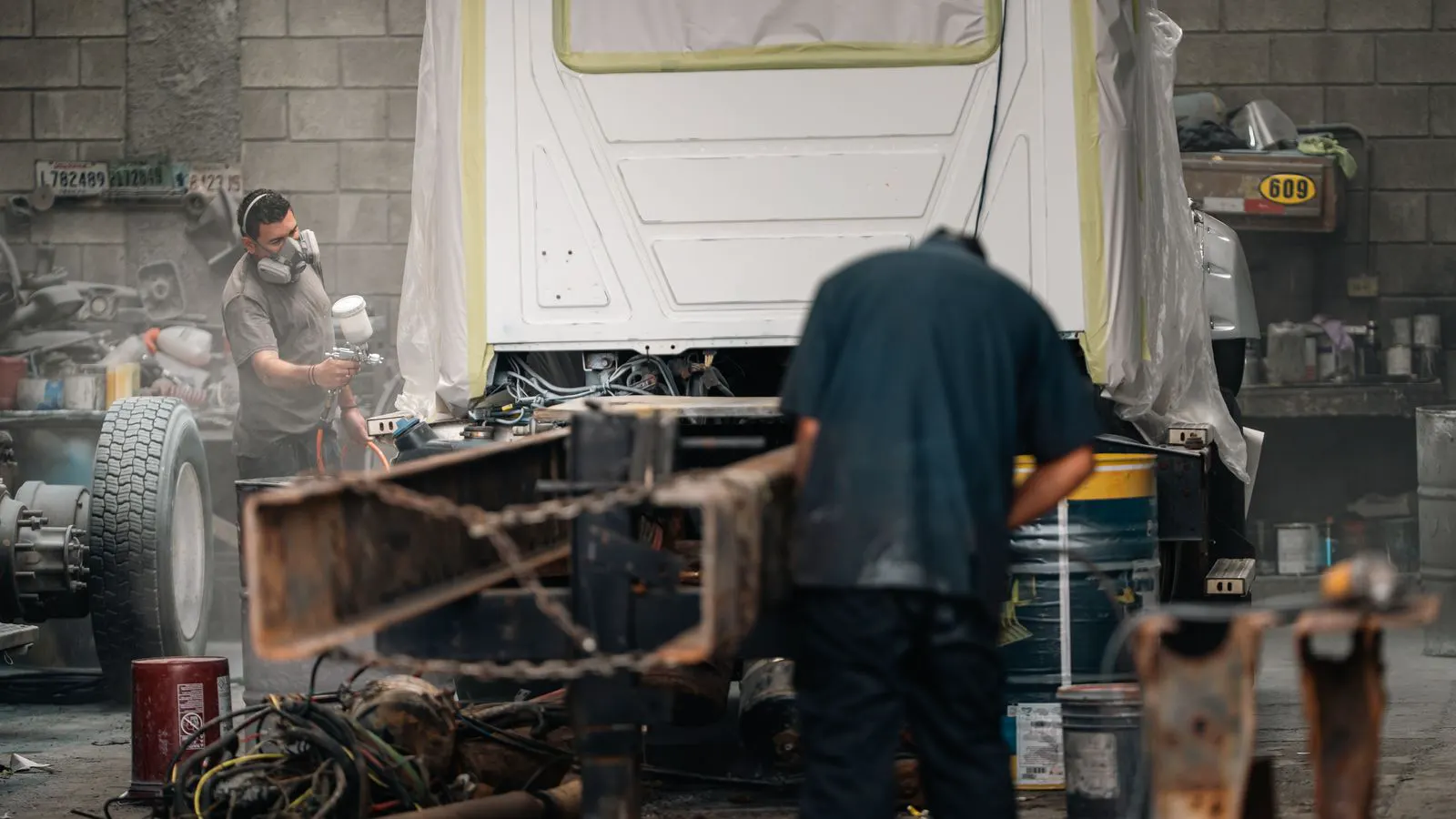
The way the liquid is applied shapes the entire operation. The most common method is airless spray. A pump forces the liquid through a nozzle, breaking it into fine droplets. This works well for large panels and flat surfaces. The operator controls the pattern and overlap.
Dipping is another method. The part is submerged in a tank of liquid. This suits small parts or those with complex geometry. The liquid coats all surfaces evenly. However, excess liquid must be removed. Drainage and flash-off time add to cycle time.
Electrostatic spray uses a charged nozzle and a grounded part. The charged paint is drawn to the metal surface. This method wraps edges and reduces overspray. It is efficient for automotive and appliance parts. The part must be electrically grounded to avoid charge buildup.
Each method has trade-offs. Airless spray gives high speed but requires skilled operators. Dip coating is simple but slower. Electrostatic spray is precise but needs specific equipment setup. The choice depends on part shape, production volume, and required finish quality.
Comparing Liquid Painting to Powder Coating
Engineers often compare liquid painting with powder coating. The two processes share the same goal but differ in material handling and cure. Powder is a dry resin that fuses under heat. Liquid is a solution that evaporates and cures.
Powder coating generates less waste. Overspray can be recycled. The material is stable in storage. It does not expire. Liquid paint, on the other hand, has a shelf life. Solvents evaporate over time. Water-based paints can develop microbial growth if not stored correctly.
Cure time differs too. Powder cures in minutes at high temperatures. Liquid coatings can cure quickly if the solvent is volatile, but some resins require longer flash-off before entering the oven. The oven temperature for liquid coatings is often lower than for powder. This can reduce thermal distortion on heat-sensitive parts.
| Feature | Liquid Painting | Powder Coating |
|---|---|---|
| Material State | Liquid solution or suspension | Dry granular resin |
| Application | Spray, dip, or flow | Electrostatic or fluidized bed |
| Waste Handling | Solvent recovery or disposal | Overspray recycling |
| Cure Profile | Lower temperature, longer flash | High temperature, fast cure |
| Finish Options | Glossy, textured, metallic | Matte to gloss, limited textures |
| Storage | Limited shelf life | Long shelf life |
Surface Preparation and Film Quality
Liquid painting is unforgiving on the substrate. The liquid flows into every pore and defect. If the metal is not clean and even, the finish will show the flaw. Engineers must specify the right surface preparation.
Chemical conversion coatings are common. Zinc or phosphate treatments create a barrier that improves adhesion. The treatment bath must be maintained. Temperature, pH, and concentration all matter. Drift in the bath chemistry can lead to poor adhesion or uneven film.
Abrasive blasting is another standard. It removes rust, old coatings, and oils. The resulting surface profile helps the liquid wet the metal. The profile must be measured. Too smooth, and the paint may not grip. Too rough, and the finish will look uneven.
Cleaning is the final step. Parts must be free of oils and dust. A wipe-down with a solvent or an alkaline detergent is typical. The cleaning agent must not leave residues that interfere with adhesion. A drop test or tape test verifies the result.
Environmental Controls and Waste Management
The environment where liquid painting happens is critical. Solvent-based paints release volatile organic compounds. These must be controlled. Local regulations often dictate the allowable concentration in the air. Facilities may need abatement systems like thermal oxidizers or carbon adsorption.
Water-based paints have lower VOCs. They are easier to manage in many regions. However, they require careful drying. Humidity must be kept low. If the air is too moist, the film may cure slowly or develop blisters. The spray booth must maintain a steady airflow.
Waste is a major sourcing consideration. Used paint, rags, and solvent residues are hazardous waste. Facilities must have disposal contracts. The cost of waste handling can be a significant part of the total cost. When evaluating a supplier, ask about their waste management plan. Do not assume they will handle it.
A Worked Example: Finishing a Steel Frame
Consider a manufacturer producing steel frames for industrial equipment. The frames are large, flat, and need a durable matte finish. The parts pass through a blast line. The steel is cleaned of oil and rust. A zinc phosphate conversion coat is applied.
The frames move into a spray booth. An airless spray gun applies a liquid paint. The paint is a water-based polyurethane with a matte topcoat. The operator adjusts the nozzle pressure to ensure even coverage. The frames move to a flash-off area. Here, they sit for a set time. The solvent evaporates. The film becomes tacky.
Next, the frames enter a curing oven. The temperature is moderate. The heat hardens the resin. The film becomes chemically stable. The parts are inspected. A coating thickness test verifies the spec. A salt spray test checks adhesion and corrosion resistance. The frames are ready for assembly.
This example shows the flow. Blast, convert, spray, flash, cure, inspect. Each step has a purpose. Skipping or rushing one step risks a defective finish. The engineer must specify each step clearly in the drawing or finish specification.
Sourcing and Supplier Evaluation
When sourcing liquid painting services, focus on process control. Ask how the facility maintains spray booth air quality. Check the ventilation rate. Ask about the cleaning agents used. Verify the conversion bath chemistry. These details affect the final film quality.
Color matching is another factor. Liquid paints are mixed to order. The supplier must have a reliable color lab. They should use spectrophotometers to match the approved color. Ask for a sample batch before full production. Compare the sample to your standard in daylight.
Lead time matters. Liquid paints have shelf life. If the supplier stores the paint too long, the performance may degrade. Ask about their inventory practices. Do they use fresh batches? Do they rotate stock? A supplier with good inventory control reduces the risk of batch-to-batch variation.
Final Thoughts on Choosing Liquid Painting
Liquid painting is a flexible option. It offers a broad range of colors and finishes. It can be applied at lower temperatures than powder. It suits parts with complex shapes or heat sensitivities. The process is well understood and widely available.
It also has constraints. Solvent handling and waste disposal require care. Surface preparation must be exact. The environment must be controlled. The cost of labor and equipment is higher than for simple powder lines.
Engineers should weigh these factors against the project needs. If the finish quality is the top priority, liquid painting is a strong candidate. If speed and low waste are the top priorities, powder coating may be better. The choice depends on the specific part, the production volume, and the site conditions.
Frequently asked questions
What is the main difference between liquid painting and powder coating?
Liquid painting uses a liquid resin applied by spray or dip, then cured by heat. Powder coating uses a dry resin applied electrostatically, then melted into a film by heat.
Can liquid painting be used on heat-sensitive parts?
Yes. Liquid coatings often cure at lower temperatures than powder. This makes them suitable for parts that might warp if exposed to high heat.
How long does the liquid paint need to dry before curing?
This is called flash-off time. It varies by the specific resin and humidity. The supplier will provide the required time. The film must be dry to the touch before entering the oven.
Is water-based liquid painting better than solvent-based?
Water-based paints have lower volatile organic compound emissions. They are often easier to permit. Solvent-based paints often have faster drying and better leveling. The choice depends on local rules and finish needs.
What happens if the metal is not clean before painting?
The paint will not adhere properly. Oils, rust, or dust create weak points. The film may peel or blister. Surface preparation is the most critical step in the process.