Outlook for UV-Curable Liquid Coatings in Finishing
UV-curable liquid painting is moving from niche specialty use into mainstream industrial finishing. The shift is driven by low VOC coating chemistry and faster production cycles. Buyers should prepare for new equipment needs, material handling changes, and updated supplier qualification requirements.
- UV-curable liquid painting replaces heat curing with lamp curing, changing plant layout and energy use.
- Low VOC coating formulations are the main driver for environmental compliance and indoor air quality.
- Buyers must verify film thickness, adhesion, and cross-link density before approving new systems.
- Material handling changes as liquid resins are more sensitive to contamination than powder.
- Supplier qualification must now cover UV lamp output, filtration, and maintenance schedules.
Why UV-Curable Liquid Coatings Are Gaining Traction
Industrial liquid painting is shifting toward UV-curable systems. These coatings harden under ultraviolet light instead of baking in an oven. The change reduces energy consumption and shortens cycle times. It also aligns with stricter environmental rules on volatile organic compounds.
The technology is not new. It has been used in wood, furniture, and electronics for decades. Now it is moving into heavier industrial applications. Buyers in metalworking, automotive, and appliance manufacturing are evaluating these systems for parts that previously relied on conventional liquid paint or powder coating.
Consider a sheet metal enclosure for an industrial control cabinet. A conventional shop might prime and topcoat these enclosures in a two-stage oven. The ovens consume significant thermal energy. The cycle time includes loading, heating, holding, and cooling. A UV system replaces the oven with a short pass under a high-intensity lamp bank. The same enclosure exits the booth fully cured. The shift removes the thermal bottleneck. It also allows the line to run continuously without the intermittent heat spikes associated with oven batching.
The core appeal is speed. A part can move through a production line without waiting for an oven cycle. This matters when throughput is the limiting factor. It also matters when space is tight. Removing a large cure oven frees up floor area. In many plants, the oven occupies the largest single footprint in the finishing bay. Repurposing that space for additional spray booths or packaging increases capacity.
There is also a consistency argument. Oven curing depends on maintaining precise temperature and humidity. Drift in oven performance can cause uneven film cure or defects like orange peel. UV curing depends on light intensity and distance. When controlled correctly, the cure is highly repeatable. The film chemistry reacts to a specific wavelength. Once the energy density is sufficient, the cross-linking is complete. This creates a predictable baseline for quality.
How UV Curing Changes the Production Line
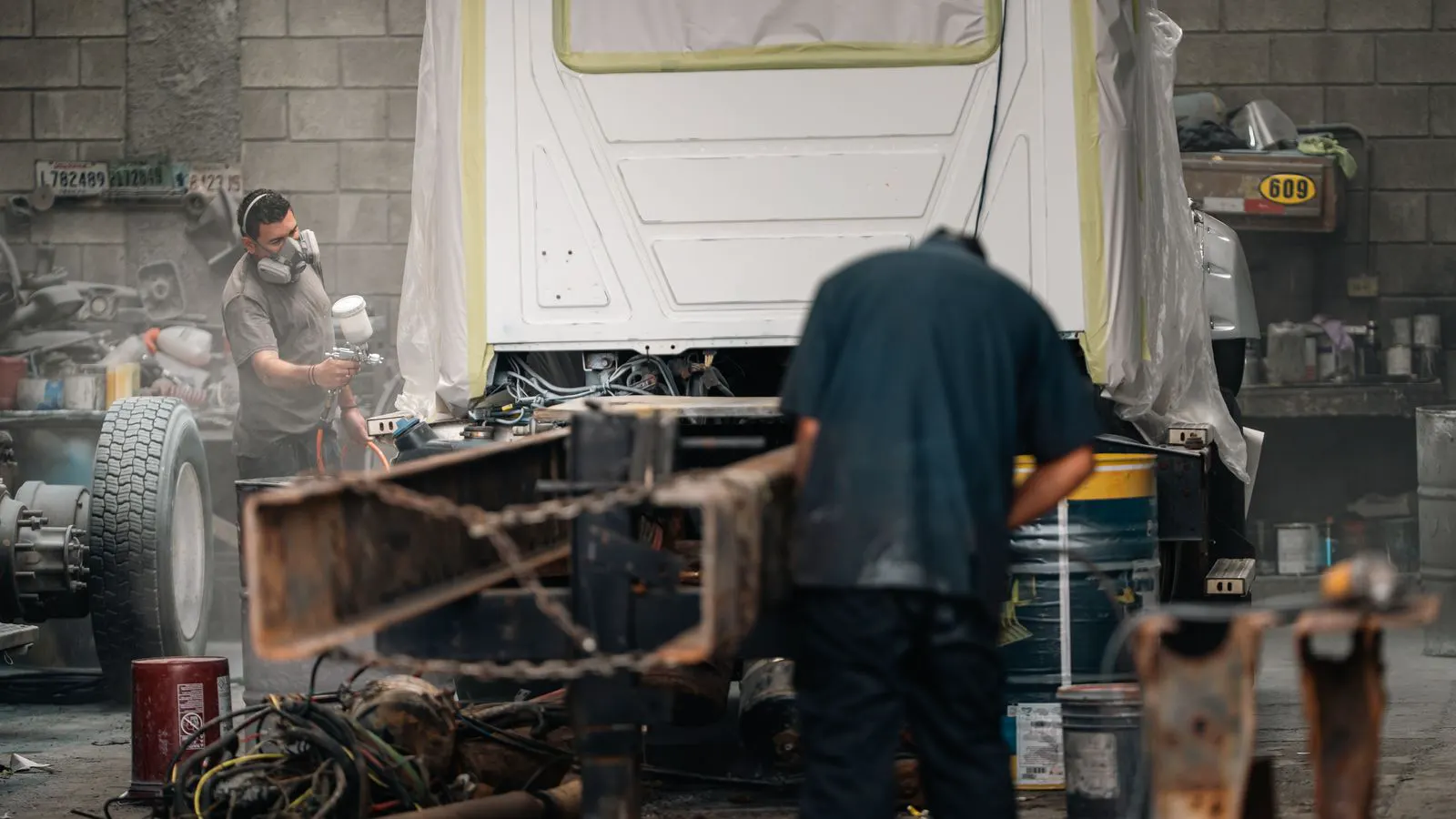
The biggest physical change is the cure station. Instead of a high-temperature oven, the line now uses UV lamps or LED arrays. These fixtures require precise positioning. The distance between the lamp and the part determines cure quality.
Buyers should plan for three equipment changes. First, the line layout shifts. Parts must pass directly under the lamps. The conveyor speed must be synchronized with the lamp intensity. If the part moves too fast, the cure is incomplete. If it moves too slow, the surface may over-cure or discolor. Second, filtration systems become critical. UV lamps require clean air to prevent lens fogging. Dust and oil mist in the air settle on the quartz or glass lenses. This blocks the light. A filtration system with appropriate filters is required between the spray booth and the lamp area. Third, maintenance routines change. Lamp output decays over time. Regular measurement and replacement are required.
The production rhythm also changes. Conventional liquid paint requires flash-off time before curing. This is the period where solvent evaporates from the wet film. For a thick coat, this can take several minutes. UV systems often cure in seconds. This compresses the line. Parts move faster through the booth. The result is less inventory in transit and less exposure to contamination.
A practical example involves a batch of automotive trim pieces. In a conventional process, the trim pieces move to a flash-off tunnel. They sit for ten to fifteen minutes. During this time, the solvent leaves the film. Then they move to the oven. In a UV process, the trim pieces move from the spray booth directly to the cure station. The gap is minimal. The solvent content in the UV resin is low. There is little to evaporate. The part is ready for the next operation almost immediately. This reduction in WIP (work in process) allows for tighter quality control. Defects can be caught earlier in the sequence.
Low VOC Coating and Environmental Compliance
The regulatory push is a major driver. Low VOC coating formulations reduce emissions from the finishing process. Traditional liquid paints release significant amounts of volatile compounds. These compounds require expensive abatement systems to meet local and national standards.
UV-curable liquid painting reduces this burden. The chemistry is designed to cure quickly with minimal evaporation. This lowers the VOC content per part. It also reduces the energy needed for air filtration and exhaust.
Buyers should verify the actual VOC content of the product. Marketing claims can be vague. Request the technical data sheet and check the numbers against local regulations. In some regions, the threshold for “low VOC” is defined by law. In others, it is a supplier claim.
Indoor air quality improves as well. Factory workers are exposed to fewer hazardous compounds. This can simplify health and safety protocols. It may also reduce insurance premiums. The shift is not just about compliance. It is about creating a safer work environment.
Consider the impact on the facility’s air handling system. A conventional paint shop requires a large exhaust fan and a scrubber or carbon filter to handle the solvent vapors. The energy cost of running this system is significant. It runs continuously during production. A UV system produces far less vaporous waste. The exhaust fan can be smaller. The filtration media lasts longer. This reduces both capital expenditure and operating cost.
There is also a consideration regarding waste. Conventional paint generates waste cans, rags, and solvent residues. These often require hazardous waste disposal. UV systems generate less of this type of waste. The leftover resin in the spray gun or nozzle is typically cured before disposal. This makes waste management simpler.
Material Handling and Application Control
Liquid resin is more sensitive than powder. It can be contaminated by dust, moisture, or oil. Application control is tighter. The part surface must be cleaner before spraying. Any residue that would be removed by a powder coat bake cycle may remain in a UV-cured film.
Application equipment must be calibrated. Nozzles, air pressure, and fluid temperature all affect film thickness. UV systems often apply thinner films than conventional paint. This is by design. The high cross-link density of UV resins allows a thinner coat to perform well.
Buyers must define acceptance criteria. What film thickness is required? What adhesion level is needed? How much abrasion resistance is expected? These parameters must be written into the purchase order. They must be verified on every batch.
The table below compares typical application parameters for conventional liquid paint and UV-curable systems.
| Parameter | Conventional Liquid Paint | UV-Curable Liquid Painting |
|---|---|---|
| Cure Method | Heat Oven | UV Lamp or LED Array |
| Cycle Time | Minutes to Hours | Seconds to Minutes |
| Film Thickness | 15 to 60 microns | 5 to 20 microns |
| VOC Content | High | Low |
| Surface Prep | Standard Degreasing | Strict Degreasing and Cleaning |
| Energy Use | High Thermal | High Electrical |
Surface preparation is the most common point of failure. In a powder coat shop, the part goes through a pretreatment bath and then into a high-temperature oven. The heat helps the powder melt and bond to the metal. In a UV shop, the part goes through a pretreatment and then into a UV lamp. There is no heat to help the bond. The metal surface must be pristine.
A specific example involves a steel bracket used in a conveyor system. The bracket is shot-peened to improve adhesion. It is then washed in an alkaline cleaner. If the washer does not rinse thoroughly, alkaline residues remain on the part. When the UV resin is sprayed, it cures around the residue. The film may crack or peel off later. The problem is not the resin. It is the part preparation.
Application control also involves the spray equipment. UV resins are often thixotropic. They resist flow to prevent sagging. If the fluid is too cold, it becomes too thick. The spray pattern becomes uneven. If the fluid is too warm, it thins out. The film becomes too thin. The temperature of the fluid must be controlled. Many systems use heated lines to keep the resin at the optimal viscosity.
Quality Checks and Failure Modes
UV-curable systems have distinct failure modes. Incomplete cure is the most common issue. If the part does not receive enough UV energy, the film remains soft. It may fail adhesion tests or scratch easily.
Over-cure is less common but possible. Excessive UV exposure can cause surface chalking or yellowing. This is more visible on clear coats than on pigmented systems.
Buyers should require cure verification. A simple check is a thumb press or a solvent wipe. More rigorous checks involve measuring gel penetration. If the solvent does not penetrate the film, the cure is likely adequate.
Adhesion testing is critical. UV systems often use a two-part chemistry. The primer and the topcoat must be compatible. If the primer is not fully cured before the topcoat is applied, the bond can fail. Specify the sequence and the dwell time.
Incomplete cure often manifests as a soft film. A simple test is to press a thumbnail into the surface. If the thumb leaves a mark, the cure is insufficient. A solvent wipe test involves dragging a cloth soaked in a mild solvent, such as isopropanol, across the surface. If the solvent dissolves the film or lifts it, the cure is incomplete. This indicates that the energy density was too low or the part moved too fast.
Over-cure can cause surface degradation. The UV light breaks down the top layer of the resin. This results in chalking, a white powder that rubs off. It can also cause yellowing, especially in clear coats. This is a cosmetic issue but can be a functional problem if the coating is exposed to sunlight.
Adhesion failure is often linked to the primer system. UV primers are designed to be cured before the topcoat is applied. If the topcoat is sprayed immediately after the primer, the bond between the two layers may be weak. The primer needs time to harden. This time is called the dwell time. It must be specified in the process sheet.
Supplier Qualification and Long-Term Support
The supplier relationship changes when you move to UV systems. The supplier must understand your specific line. Lamp output, distance, and part geometry all matter. A system that works on a flat panel may fail on a complex three-dimensional part.
Request a pilot run. Apply the coating on your actual parts. Run the line at production speed. Test the finished parts for adhesion, hardness, and appearance. Do not rely on sample panels only. Real parts have real tolerances and real surface conditions.
Maintenance support is part of the contract. UV lamps have a limited life. Filtration systems need cleaning. The supplier should provide a maintenance schedule. They should also provide a spare parts list.
The shift to liquid painting with UV curing is not a drop-in replacement. It is a change in process. It requires new skills, new equipment, and new quality checks. The rewards are real. Faster cycles, lower energy use, and better environmental performance.
Supplier support goes beyond the initial sale. The supplier must be able to troubleshoot issues when they arise. If the cure quality drops, the supplier needs to help identify the cause. It could be a lamp failure, a filter clog, or a change in resin chemistry.
A pilot run is essential. A sample panel is flat and uniform. It does not represent the complexity of a real production part. A real part may have sharp corners, recessed areas, or thin edges. These areas receive less UV light. The cure may be uneven. The pilot run reveals these issues. It allows the team to adjust the lamp position or the conveyor speed before full production begins.
Maintenance support is critical. UV lamps are high-intensity light sources. They generate heat. They also emit a specific wavelength of light. Over time, the output decreases. The quartz or glass envelope may degrade. The lamps need to be replaced. The supplier should provide a schedule for this. They should also provide filters for the ventilation system. Dust buildup can reduce lamp efficiency.
How to Prepare Your Facility
Start with a gap analysis. Identify which parts are good candidates for UV systems. Flat, simple parts are easier. Complex parts with shadowed areas are harder. Decide which applications justify the change.
Next, review your plant layout. Can you install UV lamps on the existing line? Do you have the electrical capacity? Do you have the space for filtration? If the answer is no, plan for upgrades.
Train your staff. Operators must learn to handle liquid resin safely. They must understand the sensitivity of the material. They must know how to calibrate spray equipment. Quality engineers must learn the new test methods.
Finally, update your specifications. Rewrite the purchase order to include UV-specific requirements. Define the cure energy. Define the film thickness. Define the adhesion test. Make the requirements measurable.
The transition to UV-curable liquid painting is moving from experimental to practical. It is a viable option for many industrial applications. The key is to plan for the changes. Prepare the facility, train the people, and qualify the supplier. The result is a more efficient and compliant finishing process.
The gap analysis should identify the specific parts that will benefit most from the speed of UV curing. High-volume parts with short cycle times are ideal candidates. Parts that are currently limited by oven capacity are good targets. Complex parts with deep recesses or thin edges require more careful evaluation. These parts may need multiple lamp stations or a different application method.
Plant layout review involves checking the electrical service. UV lamps are high-power loads. A single lamp bank may draw several kilowatts. If the plant’s electrical capacity is already near its limit, upgrades may be needed. The space for filtration is also important. The filters must be accessible for cleaning. The ventilation system must be sized to handle the exhaust from the spray booth.
Training is a significant part of the transition. Operators must learn to handle the liquid resin. It is a different material from powder. It is more sensitive to contamination. It requires different handling techniques. Quality engineers must learn the new test methods. They must understand the difference between conventional cure and UV cure. They must know how to interpret the results of solvent wipe and gel penetration tests.
Updating specifications is the final step. The purchase order must include the specific requirements for the UV process. It must define the cure energy in joules per square centimeter. It must define the film thickness in microns. It must define the adhesion test method. These requirements must be measurable and verifiable. This ensures that the supplier and the buyer are on the same page. It also provides a clear basis for quality control.
Frequently asked questions
Can UV-curable liquid painting replace powder coating entirely?
No. It is a complementary technology. Powder coating remains better for certain high-profile parts and high-throughput lines. UV liquid painting excels in speed and low VOC requirements.
What is the biggest risk with UV-curable systems?
Incomplete cure. If the UV energy is insufficient, the film will not harden. This leads to adhesion failure and poor durability.
How much does UV curing reduce energy consumption?
It reduces thermal energy use significantly. The lamps require less energy than a large bake oven. However, electrical costs for the lamps and filtration must be considered.
Are UV-curable coatings compatible with all substrates?
Most metal substrates work well. Aluminum, steel, and zinc-plated parts are common. Surface preparation is critical for all substrates.
How long do UV lamps last?
Lamp life varies by type and duty cycle. LED systems generally outlast traditional mercury lamps. Regular monitoring is required to detect output decay.