Sandblasting vs Bead Blasting: Which Is Best?
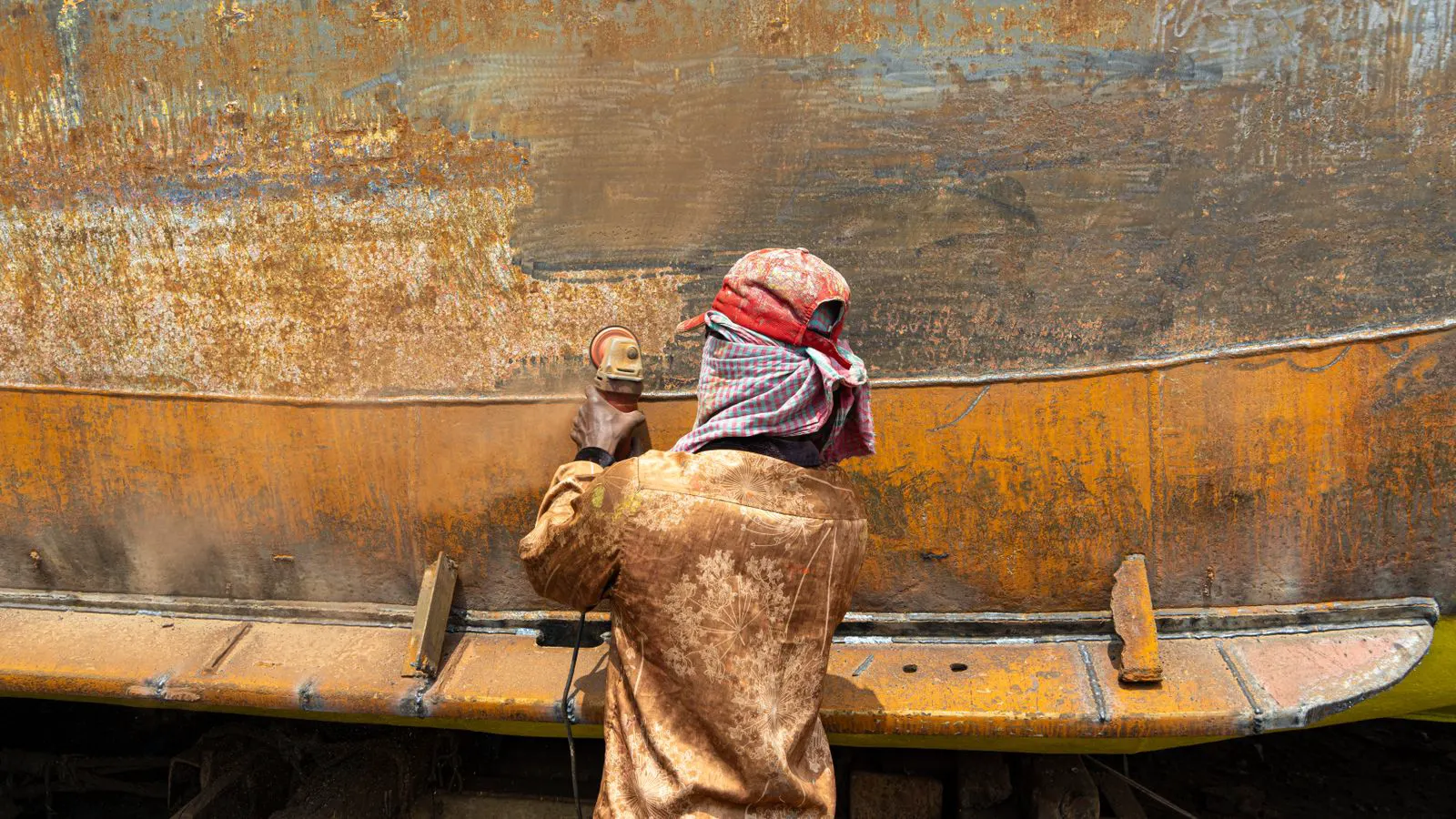
Sandblasting typically creates a rougher, more aggressive profile, while bead blasting yields a smoother, more uniform finish. The best choice depends on the required surface texture, part material, and cleaning depth.
- Sandblasting is preferred for heavy scale removal and deep cleaning.
- Bead blasting provides a smoother, more consistent surface profile.
- Media selection and grit size control the final surface texture.
- Part material and required finish dictate the method.
- Test a small area before committing to a full production run.
How the Two Methods Differ
Sandblasting and bead blasting both use an abrasive projectile to clean, etch, or roughen a surface. The core difference lies in the media shape and the resulting surface texture. Sandblasting uses irregular, sharp-edged particles. Bead blasting uses spherical or near-spherical media, such as glass beads, steel shot, or aluminum oxide spheres.
The shape of the abrasive determines how it interacts with the workpiece. Irregular particles strike the surface at random angles. This creates a rougher, more textured finish. Spherical media bounce and tumble across the surface. This action produces a smoother, more uniform profile. For buyers and engineers, the choice between the two methods hinges on the required surface texture and the part requirement.
Consider a cast iron bracket versus a stainless steel fastener. The bracket may have thick, flaky rust and deep pits from the foundry. A sharp-edged sand or crushed garnet will strike the metal at unpredictable angles, digging into the surface and breaking up the corrosion quickly. The result is a matte, pitted appearance. The fastener, however, must retain a smooth, consistent geometry for thread engagement. Spherical glass beads or fine aluminum oxide spheres will roll over the surface, removing fingerprints and light oxidation without creating deep voids. The finish remains even, allowing paint or plating to flow uniformly into the threads.
The physical interaction matters for durability as well. Irregular media can leave micro-edges on the surface, which may trap contaminants if the part is not cleaned again afterward. Spherical media tend to produce a cleaner profile with fewer sharp edges. This distinction is visible under a magnifying glass and measurable with a profile gauge. If the part will be coated, the profile height directly influences how much primer is absorbed and how thick the final film must be to prevent pinholes.
What Determines the Right Abrasive
Selecting between sandblasting and bead blasting requires evaluating three factors. First, the base material. Soft materials like aluminum or copper respond differently to abrasive impact than hardened steel or cast iron. Harder surfaces require higher energy or coarser media to achieve the desired profile. Aluminum, for instance, is easily scratched by coarse garnet. If the goal is only light cleaning, a fine glass bead is safer to avoid deep gouging. Hardened tool steel, on the other hand, will barely register a fine bead blast. It needs the kinetic energy of steel shot or coarse aluminum oxide to remove surface scale and modify the microstructure.
Second, the cleaning requirement. If the goal is to remove heavy rust, paint, or scale, a more aggressive method is needed. If the goal is to clean a machined surface or prepare it for painting, a milder approach is often sufficient. A machined bearing race, for example, may only need the removal of cutting oil and light handling marks. A bead blast with fine glass beads can achieve this in seconds. A cast pipe joint, however, may have years of rust and old epoxy paint. Bead blasting would take far longer to penetrate the layers. Sandblasting or shot blasting is more efficient here, as the sharp edges of the media break the bond between the contaminant and the substrate.
Third, the final surface texture. Some applications demand a matte, textured finish for grip or paint adhesion. Others require a smooth, even surface for coating consistency. The abrasive selection must align with these targets. A motorcycle frame often needs a matte finish to improve paint adhesion and hide minor imperfections. Sandblasting with garnet achieves this texture rapidly. A medical implant, such as a titanium hip joint, requires a specific surface roughness for bone ingrowth but must not have sharp edges that could damage tissue. A controlled bead blast with aluminum oxide or ceramic spheres provides the necessary roughness without the unpredictable sharpness of sand.
Comparison of Sandblasting and Bead Blasting
| Option | Best for | Limitations |
|---|---|---|
| Sandblasting | Heavy rust removal, scale stripping, deep cleaning | Creates a rough, uneven profile; may require rework for smooth finishes |
| Bead Blasting | Uniform matte finish, cosmetic cleaning, smooth surfaces | Less effective for heavy scale removal; media cost and purity are higher |
| Aluminum Oxide Blasting | Medium cleaning, consistent texture on steel | Can produce a slightly rougher finish than glass beads |
| Steel Shot Blasting | Heavy-duty cleaning, surface strengthening | Very aggressive; requires careful control to avoid part damage |
| Glass Bead Blasting | Cosmetic finish, medical and food-grade parts | Higher cost; requires strict purity checks to prevent contamination |
Sandblasting excels when the primary goal is aggressive cleaning. It removes contaminants quickly and effectively. The trade-off is control. The surface profile can be uneven, especially on complex geometries. Bead blasting offers better control over the finish. It is the preferred method when the surface texture must be consistent and smooth.
Aluminum oxide serves as a middle ground. It is harder than sand but less aggressive than steel shot. It provides a good balance for steel parts that need cleaning but not the extreme roughness of sand. Steel shot is often used for shot peening, a process that induces residual compressive stresses in the surface layer. This strengthens the part against fatigue. It is too aggressive for general cleaning, however, and can round sharp edges or distort thin-walled parts if the pressure is too high. Glass beads are the most expensive of the common media, but their purity and hardness make them ideal for high-end cosmetic work. They do not leave behind silica dust, which is a significant health and environmental advantage over sand.
When to Choose Sandblasting
Sandblasting is the right choice for heavy-duty applications. Consider it when removing thick layers of rust, old paint, or industrial scale. It is also suitable for parts that will undergo subsequent machining, where the exact surface texture is less critical than the removal of contaminants.
For castings with deep pits or rough as-cast surfaces, sandblasting helps expose the base material. It is also used in pre-treatment for welding, where the surface must be clean of oxides and debris. The operator must select the correct grit size. Coarser grits remove material faster but create a deeper profile. Finer grits clean more gently but require longer contact time.
A typical scenario involves a used industrial pump housing. The housing is covered in scale and old paint. The goal is to return it to a clean state for inspection. A sandblaster using medium garnet will strip the paint and scale in a matter of minutes. The resulting surface is rough and matte. This is acceptable because the housing will be painted again. The rough profile helps the new primer bond. If the same housing were blasted with glass beads, the process would take much longer. The beads would remove the paint slowly, and the resulting surface might still have residual scale underneath. For this specific job, speed and cleaning power matter more than finish quality.
Sandblasting is also the standard for restoring historic masonry or concrete. The sharp edges of the media clean the surface without altering the structural integrity as much as water blasting might. For metal parts, however, the roughness created by sand is a double-edged sword. If the part is a structural component, the rough profile can act as a stress riser. In such cases, a subsequent smoothing pass or a different media might be required.
When to Choose Bead Blasting
Bead blasting is the standard for cosmetic and functional finishes that require uniformity. It is widely used on automotive parts, aerospace components, and consumer goods. The spherical media provides a consistent impact across the surface. This results in a matte, even texture that enhances paint adhesion and visual appearance.
For stainless steel parts, bead blasting with glass beads or aluminum oxide is common. It removes handling marks and fingerprints without deep etching. The process is also preferred for parts that must meet strict cleanliness standards, such as those used in medical or food processing. Media purity is a critical factor here. Contaminated media can introduce foreign particles into the final product.
Consider a stainless steel tank used in a pharmaceutical plant. The tank interior must be smooth and clean. Any roughness created by sandblasting could trap bacteria or product residue. Bead blasting with purified glass beads creates a smooth, matte surface. The beads are soft enough not to scratch the stainless steel but hard enough to remove light oxidation. The spherical shape ensures that the media bounces around the interior, reaching curved surfaces and corners. The result is a uniform finish that is easy to clean and sanitize.
Bead blasting is also popular for aluminum parts in the automotive industry. Aluminum is soft and easily scratched. A coarse sand blast could gouge the surface, creating deep lines that are visible in the final paint. Glass beads provide a gentle cleaning action. They remove the mill finish and oxidation without damaging the base metal. This allows for a high-quality paint job with no visible scratches.
Surface Texture and Part Requirement Considerations
The final surface profile is not just about cleanliness. It affects how coatings adhere, how the part functions, and how it looks. Sandblasting creates a textured profile that can increase mechanical bond strength for coatings. This is useful for high-performance industrial coatings. Bead blasting creates a smoother profile that allows for thinner, more uniform coating films. This is preferred for cosmetic finishes where surface defects are visible.
Part geometry also plays a role. Complex shapes with cavities or thin walls are harder to blast uniformly. Bead blasting media, being spherical, tend to follow contours better than irregular sand grains. In tight areas, sandblasting may leave spots of contamination or create uneven texture. A test shot on a representative coupon is always recommended before full production.
For a gear, for example, the teeth have a specific geometry that affects meshing. If the gear teeth are blasted with sand, the rough profile may increase friction during operation. Bead blasting with fine aluminum oxide can clean the teeth while leaving a smoother surface. This reduces wear and improves the life of the gear. The same principle applies to hydraulic components. A rough surface inside a hydraulic cylinder can wear the piston seals faster. A smooth bead-blasted surface extends the life of the seals.
The roughness of the surface also affects the appearance of the final coating. A rough profile from sandblasting can look uneven under direct light. The paint film may appear thicker in the valleys and thinner on the peaks. A smooth profile from bead blasting allows the paint to flow more evenly. This results in a more professional finish. For parts that are subject to UV exposure, a smoother surface also resists fading better, as there are fewer microscopic edges to catch the light and degrade the coating.
Practical Selection Checklist
- Identify the primary goal: cleaning, etching, or cosmetic finish.
- Determine the base material and its hardness.
- Define the required surface texture and roughness range.
- Evaluate part geometry and accessibility for blasting.
- Check media purity requirements, especially for sensitive applications.
- Review environmental and waste handling constraints for the chosen media.
- Conduct a small-area trial to verify the profile and cleaning effectiveness.
A practical approach is to start with a medium-grit aluminum oxide bead blast. This often provides a good balance between cleaning power and surface finish. If the profile is too smooth, increase the grit size or switch to a more irregular media. If the cleaning is insufficient, switch to sandblasting or a coarser shot. The goal is to find the minimum aggressive method that meets the requirement.
Common Mistakes in Abrasive Selection
One frequent error is assuming that a finer grit always produces a better finish. A fine grit removes material slowly and may not achieve the required depth of cleaning. For heavy contamination, a coarser medium followed by a finer pass is often more effective.
Another mistake is ignoring media shape. Using irregular media when a uniform profile is needed leads to inconsistent results. Conversely, using spherical media for heavy scale removal wastes time and equipment wear.
Finally, neglecting media purity is a risk. Even small contaminants in the media can cause corrosion or surface defects later. For critical parts, verifying the media batch is a standard quality control step.
Final Guidance on Method Selection
The choice between sandblasting and bead blasting is not about which is superior. It is about which method meets the specific part requirement. Sandblasting is a workhorse for aggressive cleaning. Bead blasting is a precision tool for controlled surface texture.
Engineers and buyers should define the surface texture and part requirement before selecting a method. A short trial run on a scrap part or a non-critical area can save significant production time. The abrasive selection must consider material, geometry, and final finish. When these factors are aligned, the chosen method will deliver the expected result consistently.
Frequently asked questions
Which method is better for removing heavy rust?
Sandblasting is generally better for heavy rust removal. Its irregular media provides higher impact energy for aggressive cleaning.
Can bead blasting be used on cast iron?
Yes, bead blasting is suitable for cast iron when a smooth, matte finish is required. It is less effective for removing deep scale than sandblasting.
What grit size is typically used for stainless steel?
Grit size varies by required texture. Fine to medium grits are common for cosmetic finishes. Coarser grits are used when more material removal is needed.
Is glass bead blasting suitable for food-grade parts?
Yes, glass beads are often used for food-grade applications due to their inert nature. Media purity must be verified to prevent contamination.
How do I ensure an even surface profile after blasting?
Use appropriate media size and maintain consistent blast distance and pressure. Complex parts may require multiple passes or a combination of media.