Outlook for Automated Passivation in Surface Finishing
Automated passivation is moving from manual tank work toward closed-loop, sensor-driven systems. Buyers should plan for tighter cycle consistency, better corrosion control, and stronger traceability. The shift requires changes in cleaning, water management, and operator roles rather than just new equipment.
- Automation is improving passivation consistency by reducing human variation in mixing, timing, and part loading.
- Buyers should prepare for tighter data requirements, including bath chemistry logs and cleaning verification records.
- Water and waste handling will become more visible as passivation lines shift toward closed-loop operation.
- The operator role is changing from manual tank management to system monitoring and troubleshooting.
- Process capability will depend as much on upstream cleaning and part geometry as on the passivation step itself.
Automated passivation is changing how metal parts move through the finishing line. The step is no longer just a chemical dip. It is becoming a controlled, measured part of a larger corrosion control system.
For many buyers, the change is visible in the result. Parts leave the line with fewer cleaning marks, fewer oxide contamination issues, and a more repeatable chromium oxide film. The deeper change is in the operation. Passivation is moving toward closed-loop control, where sensors, pumps, filtration, and software manage the chemistry and timing.
This does not mean every small job shop will install the same large system. The outlook is more mixed. Large production lines are moving toward full automation. Smaller operations are adopting semi-automated controls, such as automated dosing, timed pumps, and bath monitoring. The direction is clear. Passivation is becoming more data-driven, more integrated, and more sensitive to upstream cleanliness.
What is changing in the passivation process?
The core passivation process has not disappeared. Stainless steel parts are still cleaned, immersed in a nitric or citric acid solution, rinsed, and dried. The change is in how each step is controlled.
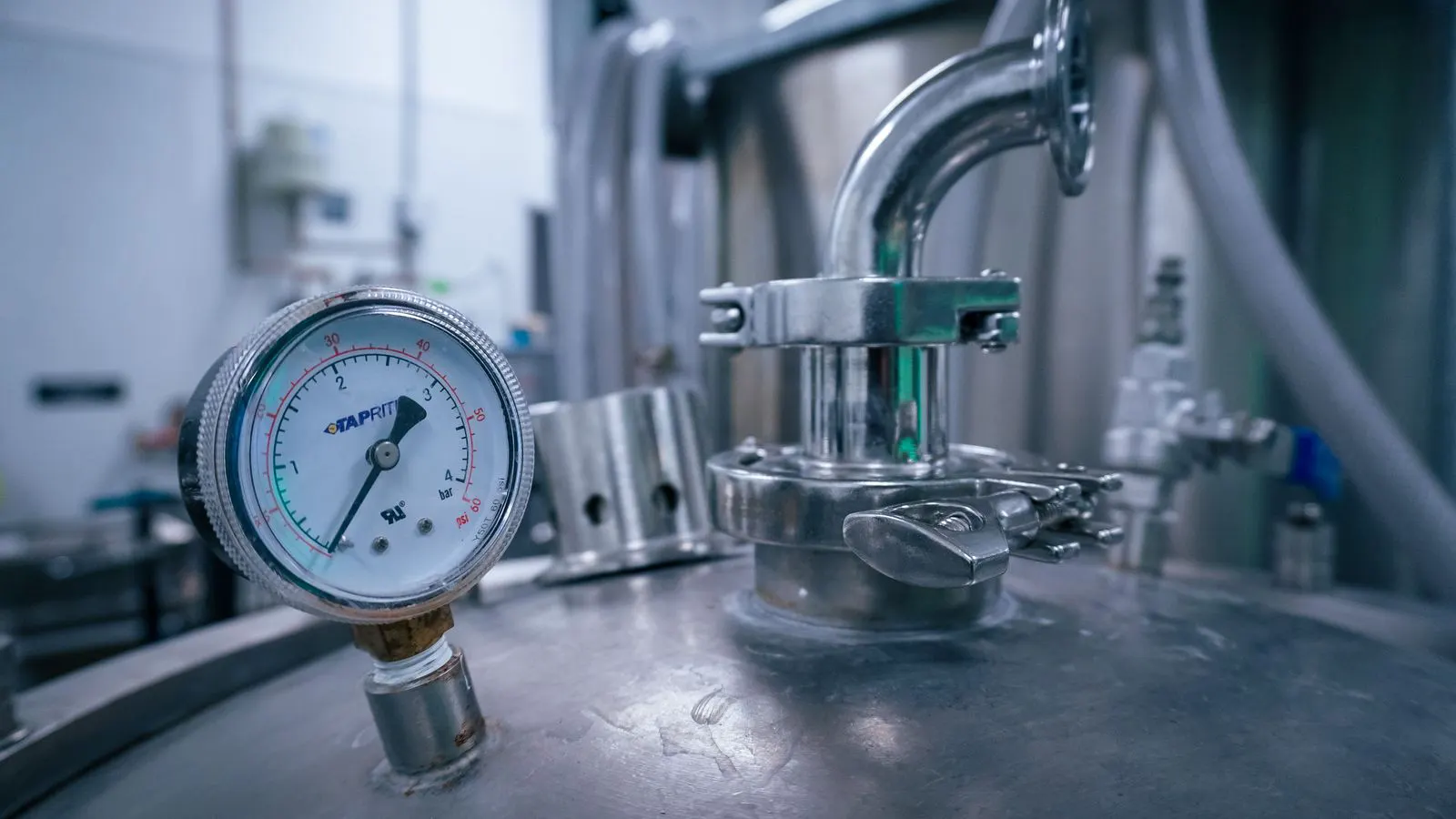
In a traditional setup, an operator checks the bath, adjusts the acid strength, and watches the parts. In an automated setup, sensors track temperature, concentration, and flow. Pumps move the solution. Timers control immersion. Software records the cycle.
The practical effect is consistency. A part that is slightly oversized, slightly under-cleaned, or slightly longer in the tank is less likely to create a visible defect. The system can hold the chemistry in a tighter window than a manual operator can manage by eye.
For stainless steel, this matters because the passivation film is thin and sensitive. A small variation in acid concentration, temperature, or rinse quality can show up later as a corrosion problem. Automation reduces that variation.
For aluminum, the situation is different. Aluminum passivation often uses anodizing or chemical conversion processes. The term passivation is used more broadly in industrial finishing, and automation is changing both. Aluminum parts benefit from the same trend: tighter control of bath chemistry, rinse water, and drying.
How does automation affect corrosion control?
The main goal of passivation is corrosion control. The goal of automation is to make that goal easier to hold over time.
A manual passivation line can produce good parts on a good day. An automated line can produce good parts on a bad day. That is the difference.
Automation helps in several ways.
First, it holds bath chemistry more stable. Nitric acid and citric acid solutions change over time. Evaporation, part loading, and water makeup all shift the concentration. An automated dosing system can keep the solution in the correct range.
Second, it improves rinsing. Inadequate rinsing is a common cause of post-passivation problems. Automated rinse systems can hold flow rates and rinse cycles more consistently than manual hand rinsing.
Third, it creates a record. If a part fails in the field, the buyer can look back at the cycle data. What was the bath strength? What was the temperature? What was the rinse time?
That record changes how corrosion control is managed. It is no longer only about the passivation step. It becomes part of a traceable process that connects cleaning, passivation, rinse, drying, and packaging.
Which parts are most likely to benefit from automated passivation?
Not all parts benefit equally. The parts that benefit most are the ones where consistency is hard to hold manually.
High-volume parts are the first to see the change. A buyer making thousands of small stainless fittings, brackets, or valve components will feel the pressure for repeatable quality. Manual passivation can work, but it is harder to hold over months.
Complex geometries are another group. Parts with deep pockets, small holes, or trapped cavities are hard to clean and hard to passivate manually. Automation can help by using better agitation, better circulation, and more controlled immersion.
Corrosion-critical parts are the third group. A part that goes into a marine environment, a food service line, or a medical device needs a consistent film. The buyer is not just checking the passivation step. The buyer is checking the whole process. Automation gives the buyer more confidence.
Small, custom, or low-volume parts are slower to adopt full automation. A machine shop may not justify a fully closed-loop system for a few parts at a time. But even in that environment, semi-automated controls are becoming common. Automated dosing, timed pumps, and bath monitoring are easier to justify than a full line.
What preparation should buyers make before adopting automated passivation?
Buyers often think the first step is buying the machine. That is usually the wrong order.
The first step is cleaning. Passivation cannot fix a dirty part. If parts arrive with oil, grease, coolant, or metal chips, the passivation film will not form correctly. Automation will not solve that problem. It may only make the failure more obvious.
Buyers should review their cleaning process before changing the passivation process. Are parts being cleaned consistently? Are cleaning results being checked? Are cleaning records being kept? If the answer is no, the passivation step will be fighting a losing battle.
The second step is water management. Passivation uses a lot of water. Rinse water, bath makeup, and waste handling all matter. As systems become more closed-loop, water quality becomes more visible. A buyer should understand the source water, the filtration, and the waste stream before installing a new system.
The third step is part handling. Automation works best when parts move through the line in a controlled way. Trays, racks, and fixtures need to be compatible with the system. If parts are loaded by hand, the benefit of automation is reduced.
The fourth step is documentation. Automated passivation produces data. The buyer needs to decide what to keep and how to use it. Bath logs, rinse records, and part serial numbers should be part of the process. This is not only for quality. It is for corrosion control over the life of the part.
The fifth step is operator training. The operator role is changing. The operator is no longer only checking the bath by eye. The operator is monitoring a system, troubleshooting alarms, and handling data. That is a different skill set.
What does the future of passivation look like?
The future of passivation is not one big machine replacing all manual work. It is a gradual shift toward more control, more data, and more integration.
Buyers should expect five shifts.
-
From manual checking to sensor-based monitoring. Bath chemistry will be tracked continuously. Operators will get alerts when the solution drifts out of range.
-
From isolated passivation to integrated process control. Passivation will be connected to cleaning, rinsing, and drying. The buyer will see the whole cycle, not just the acid step.
-
From visual checks to recorded data. Passivation quality will be supported by logs. Visual inspection will still matter, but it will be backed by data.
-
From open tanks to closed-loop systems. Water and chemical use will be more controlled. Waste handling will become more visible.
-
From part-by-part checking to line-level consistency. The focus will shift from checking each part to holding the line in a stable state.
These shifts are already happening. The question is how quickly the buyer will move with them.
How should a buyer evaluate a passivation supplier?
A buyer should ask the supplier to explain the process, not just the equipment.
The first question is about cleaning. How are parts cleaned before passivation? Is there a documented cleaning step? Is the cleaning verified?
The second question is about bath control. How is the acid concentration checked? How often? Who adjusts it? Is there a record?
The third question is about rinsing. What is the rinse water quality? How many rinse stages are used? Is the final rinse verified?
The fourth question is about drying. How are parts dried? Is there a risk of water spotting or residue?
The fifth question is about data. What records are kept? Can the buyer get a report for a specific lot? Can the supplier trace a problem back to a specific cycle?
A good supplier will answer these questions without hesitation. The answers should be practical, not theoretical.
What common mistakes delay the benefits of automated passivation?
The first mistake is treating passivation as a standalone step. It is not. It is part of a chain. If cleaning is inconsistent, the passivation step will fail. If rinsing is weak, the passivation film will be contaminated.
The second mistake is assuming automation fixes part design. A part with a deep pocket that traps cleaning solution will still have problems. Automation can help, but it cannot fully overcome poor geometry.
The third mistake is ignoring waste handling. A closed-loop system reduces waste, but it does not eliminate it. The buyer needs to understand the waste stream and the disposal process.
The fourth mistake is not training the operator. The system is only as good as the person running it. An operator who does not understand the alarms, the logs, and the process will not get the full benefit.
The fifth mistake is not reviewing the process after installation. The first few cycles are not the same as the first year. The buyer should review the data over time and adjust the process as needed.
Practical steps to prepare for automated passivation
- Review your cleaning process and document it.
- Check your rinse water quality and flow.
- Identify your highest-risk parts and corrosion-critical parts.
- Decide what data you need to keep for traceability.
- Talk to your supplier about sensor-based monitoring and closed-loop control.
- Plan for operator training before installation.
- Review the waste stream and disposal process.
- Start with a pilot run on a small lot before full adoption.
These steps are not expensive. They are mostly attention and documentation. But they are the difference between a system that works and a system that creates new problems.
What does this mean for your corrosion control program?
Automated passivation is changing the way corrosion control is managed. It is moving from a visual check to a recorded process. It is moving from a manual tank to a controlled line. It is moving from a single step to an integrated system.
The buyer who prepares will be in a better position. The buyer who waits will find that the process is changing anyway.
The shift is not only about better passivation. It is about better control, better data, and better corrosion control over the life of the part.
Frequently asked questions
Does automated passivation replace manual passivation?
Not fully. Many operations will use semi-automated controls, such as dosing and timing, rather than a fully closed system. The goal is consistency, not elimination of manual checks.
What parts benefit most from automated passivation?
High-volume parts, complex geometries, and corrosion-critical parts benefit most. These parts are harder to hold consistently with manual methods.
Can automated passivation improve corrosion resistance?
Yes, by reducing variation in bath chemistry, rinsing, and drying. The passivation film becomes more consistent, which supports longer-term corrosion control.
What should I check before installing an automated passivation system?
Check cleaning, rinse water, part handling, waste handling, and documentation. The system only works if the upstream and downstream steps are controlled.
How long does it take to see benefits from automated passivation?
Benefits in consistency can appear quickly. Benefits in traceability and long-term corrosion control take longer, as the data is collected over time.