What Is Nitriding? A Plain-Language Explainer
Nitriding is a thermal surface treatment that adds nitrogen to steel or titanium to create a hard, wear-resistant layer. This nitriding process is a form of surface hardening that improves durability without significantly changing part dimensions, making it a common choice for gears, tooling, and high-wear components.
- Nitriding hardens the outer layer of steel or titanium while keeping the core material tough.
- The process is slower than many other surface treatments, which affects lead times.
- Parts must be pre-ground or cleaned to ensure consistent nitriding results.
- Nitriding is ideal for components that face friction, wear, and high loads.
- Buyers should specify material, part geometry, and required hardness during sourcing.
What Nitriding Actually Does to Metal
Nitriding changes the surface of a component by adding nitrogen to its outer layers. The metal does not melt, and the base structure remains intact. What changes is the chemistry of the very thin shell on the part.
This process is most often used on steels that can hold nitrogen in a stable form. Some steels respond well to nitriding. Others do not. The choice of steel matters as much as the heat and atmosphere inside the furnace.
The result is a surface that resists wear, erosion, and galling better than untreated metal. The core of the part keeps its original strength and toughness. That balance is why engineers specify nitriding for components that must survive long contact cycles with other parts.
In plain terms, nitriding creates a hard skin while leaving the part underneath strong enough to bend or shock-load without cracking. It is a form of surface hardening that prioritizes surface durability over bulk hardness.
How the Nitriding Process Works
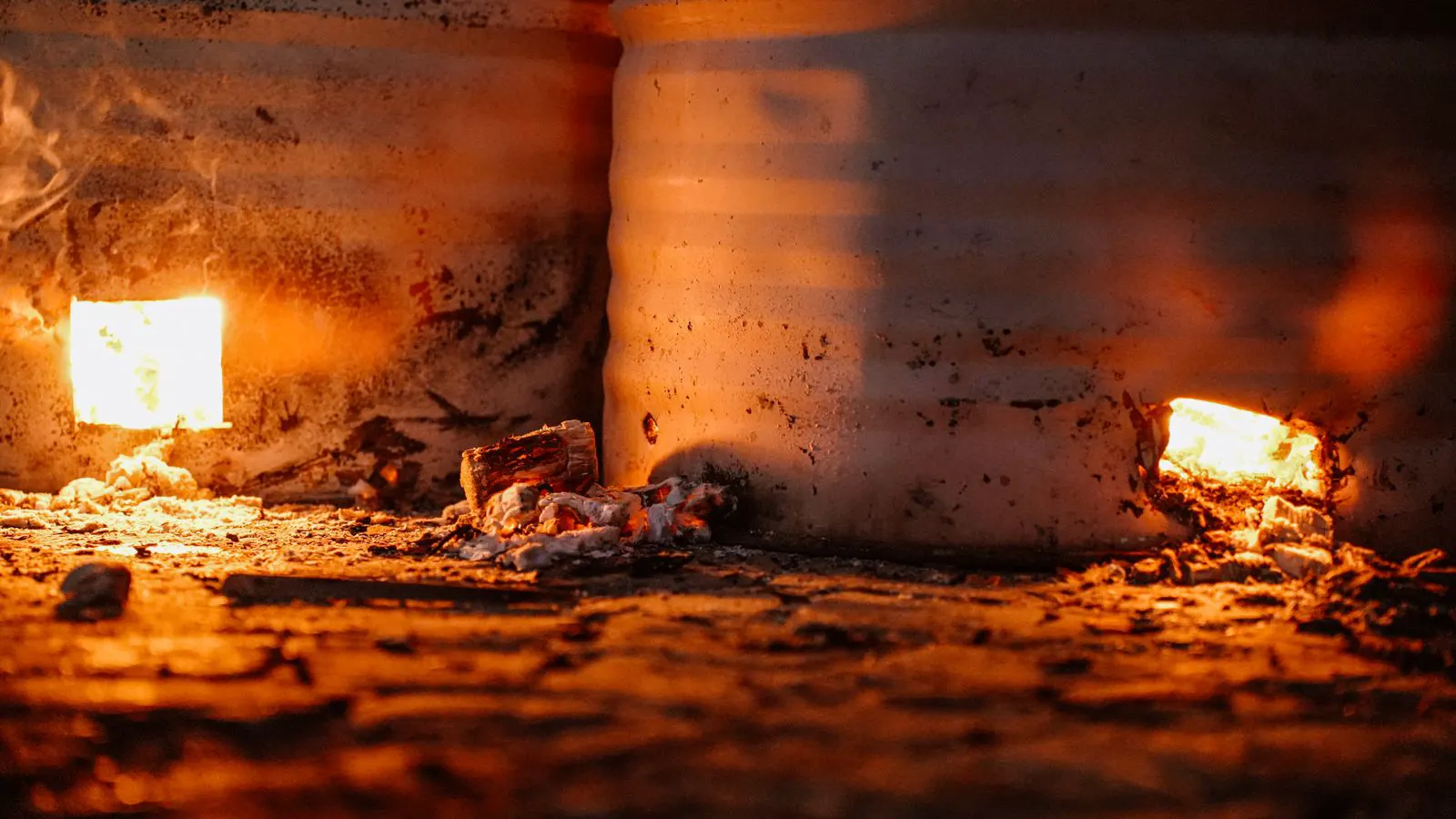
The standard nitriding process happens in a controlled furnace environment. The parts are placed in a chamber, and the atmosphere around them is adjusted to contain nitrogen. The temperature is raised high enough to allow nitrogen to enter the metal, but low enough to prevent the steel from losing its temper.
The atmosphere is not just air with nitrogen added. It is a carefully managed mix. Operators control the flow, purity, and temperature of the gases. Small changes in gas composition or temperature can alter how deep the nitrogen goes and how hard the surface becomes.
The process takes time. Nitriding is not a quick dip or a short heat cycle. The nitrogen diffuses slowly into the metal. That slow diffusion is what creates the hard layer. It is also why nitriding lead times are longer than many other surface treatments.
During the cycle, the parts sit in the furnace for an extended period. After the cycle, the parts cool down. The surface has changed. The core has not. The part is now ready for inspection and final finishing.
What Makes Nitriding Different from Other Surface Hardening Methods
Nitriding is one option among several surface hardening methods. Each method serves a different purpose.
Carbide is the other common method. Carbide hardens the entire surface to a much greater depth. It is used when the part needs extreme surface hardness and can tolerate the dimensional changes that come with it.
Nitriding is shallower. The hard layer is thinner. It is also less dimensional, meaning the part size changes very little. For many applications, that small change is a benefit. Gears, spindles, and shafts must hold tight tolerances. Nitriding helps maintain those tolerances.
The table below shows how nitriding compares to other common surface treatments in terms of depth, effect on size, and typical use.
| Treatment | Typical Hard Layer Depth | Effect on Part Size | Common Use Case |
|---|---|---|---|
| Nitriding | Shallow | Minimal | Gears, shafts, tooling |
| Induction hardening | Moderate | Very small | Crankshafts, camshafts |
| Carburizing | Deeper | Small to moderate | Gears, pins |
| Case hardening | Deep | Moderate | High-stress shafts |
The key difference is that nitriding adds nitrogen without adding carbon. This matters because carbon changes the microstructure differently than nitrogen. Nitrogen allows for a hard, wear-resistant surface that still keeps the underlying steel tough.
Why Buyers and Engineers Specify Nitriding
Engineers specify nitriding when wear is the main failure mode. If a part fails because of friction, surface pitting, or galling, nitriding is a strong candidate.
The process is also chosen when dimensional stability matters. In precision machinery, a change of even a few microns can affect function. Nitriding is one of the surface treatments that changes the part size very little.
There are also material considerations. Some steels are chosen specifically because they respond well to nitriding. The alloying elements in the steel help the nitrogen form hard compounds in the surface layer. If the steel does not have the right composition, the nitriding result may be weaker than expected.
Buyers should confirm that the material specification matches the nitriding requirement. A part that is made of the wrong steel may still receive the treatment, but it will not perform the way the design calls for.
Practical Example: A Gear Train Component
Consider a gear used in a heavy-duty reducer. The gear teeth face constant friction and impact from the mating gear. The shaft through the center also experiences torsional stress.
The engineer specifies a medium-carbon alloy steel for the gear. The steel is heat treated to a baseline toughness. Then it is sent for nitriding. The nitriding process adds a thin hard layer to the tooth surface and the shaft surface.
The hard layer resists wear on the tooth contact area. The core remains tough enough to handle shock loads. The shaft surface resists wear against bearings and seals. The part size changes very little, so the gear mesh stays within tolerance.
This is a common scenario. The part is not made harder everywhere. It is made harder only where wear happens. That targeted approach is the value of nitriding.
What to Check Before Ordering a Nitriding Job
When you request a nitriding quote, several details will shape the cost and lead time.
First, the material. The steel grade determines whether nitriding will work well. Some steels require a specific pre-treatment before nitriding. The supplier needs to know the exact alloy.
Second, the part geometry. Complex shapes, tight tolerances, and internal features can affect how the gas reaches all surfaces. Parts with deep pockets or narrow slots may not nitride evenly. The supplier will look at the drawing to identify problem areas.
Third, the required hardness and depth. The specification should state the target hardness and the expected depth of the nitrided layer. Without that, the supplier may assume a standard range.
Fourth, the quantity. Small batches and large production runs have different cost structures. Nitriding furnaces are batch processes. Loading and unloading take time. The number of parts per load affects the total cost.
Fifth, the lead time. Nitriding is a slow process. The cycle time alone can take days. Add pre-treatment, inspection, and post-processing, and the total lead time is longer than for many other finishes.
How Nitriding Affects Cost and Lead Time
Cost for nitriding depends on the material, part size, quantity, and required hardness. The process is slower than many other surface treatments, and that time has a cost.
The furnace cycle is long. The parts sit in the chamber for an extended period. During that time, the operator monitors the gas flow and temperature. The furnace cannot be opened to check parts. That adds to the cycle time.
Pre-treatment is another cost factor. Many parts need to be ground or cleaned before nitriding. If the incoming part has scale, oil, or inconsistent surface finish, the supplier may need to add a preparation step.
Inspection also affects cost. After nitriding, the part is checked for hardness and depth. Sometimes the whole batch is tested. Sometimes only a sample is tested. The level of inspection depends on the application.
Lead time is the other major factor. Nitriding is not a quick service. The process itself takes days. Add the time for material preparation, furnace loading, cooling, and final inspection, and the total time from order to delivery is longer than for many other surface treatments.
This is why nitriding is often specified well in advance. If the design changes late, the part may need to be reworked or re-ordered. The slow cycle makes it harder to rush.
Common Mistakes in Nitriding Sourcing
One common mistake is sending a part without specifying the material grade. The supplier may assume a standard steel. The result may not meet the wear resistance requirement.
Another mistake is assuming nitriding works on all metals. Nitriding is effective on certain steels and on titanium. It is not a universal treatment. If the part is made of a material that does not respond well to nitrogen, the treatment may be ineffective.
A third mistake is ignoring part geometry. A part with complex features may not receive even nitriding. The gas may not reach deep pockets. The surface may have uneven hardness. The supplier should review the drawing before quoting.
A fourth mistake is not specifying the required hardness and depth. Without those numbers, the supplier may use a default. The default may not match the design requirement.
These mistakes are avoidable with a clear specification and a conversation with the supplier.
How to Request a Clear Nitriding Quote
When you request a nitriding quote, include the material grade, part drawing, quantity, and required hardness and depth. State the final application. If the part will face high wear, mention that. If the part must hold tight tolerances, mention that.
Ask the supplier about pre-treatment. Ask about inspection. Ask about lead time. Ask what happens if the part fails inspection.
A good supplier will ask clarifying questions. They will review the drawing and identify potential issues. They will explain the process in plain terms. They will give a realistic lead time.
The goal is to make sure the part receives the right treatment for the right application. Nitriding is a mature process. It works well when the specification is clear and the material is appropriate.
Frequently asked questions
What is the main purpose of nitriding?
Nitriding adds a hard, wear-resistant layer to the surface of steel or titanium while keeping the core material tough. It is used to improve durability in high-friction applications.
How long does the nitriding process take?
The nitriding cycle is slow because nitrogen diffuses gradually into the metal. The total lead time includes pre-treatment, the furnace cycle, cooling, and inspection.
Which materials are suitable for nitriding?
Certain steels and titanium are suitable for nitriding. The material must be able to hold nitrogen in a stable form. Not all metals respond well to the process.
Does nitriding change the size of the part?
Nitriding causes very small changes in part size. It is a shallow treatment, so dimensional stability is generally maintained. This makes it useful for precision components.
How does nitriding compare to other surface hardening methods?
Nitriding creates a thinner hard layer than methods like carburizing. It changes the part size less and is often chosen when wear resistance is needed without significant dimensional change.